

I still have this vivid image of Cynthia in the front passenger seat of the black Isuzu Trooper we would all pile into, usually late at night after a long day in the lab. She was a small person, maybe 5’ 2”, her frame honed by hiking and rock climbing, swallowed by the large SUV around her. She had this slightly sneaky smile, though, that made it clear that she was aware of the size discrepancies and was comfortable with it.
It was the early 1990s and we were postdoctoral researchers at the University of California at Berkeley, all of us strangely confident that the work we were doing was going to go somewhere, even when nothing was going right. Our optimism wasn’t guaranteed to work in our favor; plenty of other students and postdocs were leaving their time in the lab with little or nothing to show for it. We ignored that evidence and often found that no bad day couldn’t be improved by dinner at the Korean BBQ restaurant in Oakland where they sometimes let Joonsoo, Cynthia’s boyfriend then, do the grilling. Joonsoo had the Trooper and was happy to drive; all of us were living on a small government training stipend, and were fortunate that the only car between us was spacious enough for our group to squeeze into. After commandeering a large enough restaurant table, we’d order beers, indulge in kimchee and debate the day’s results or seminar talks, if there had been one.
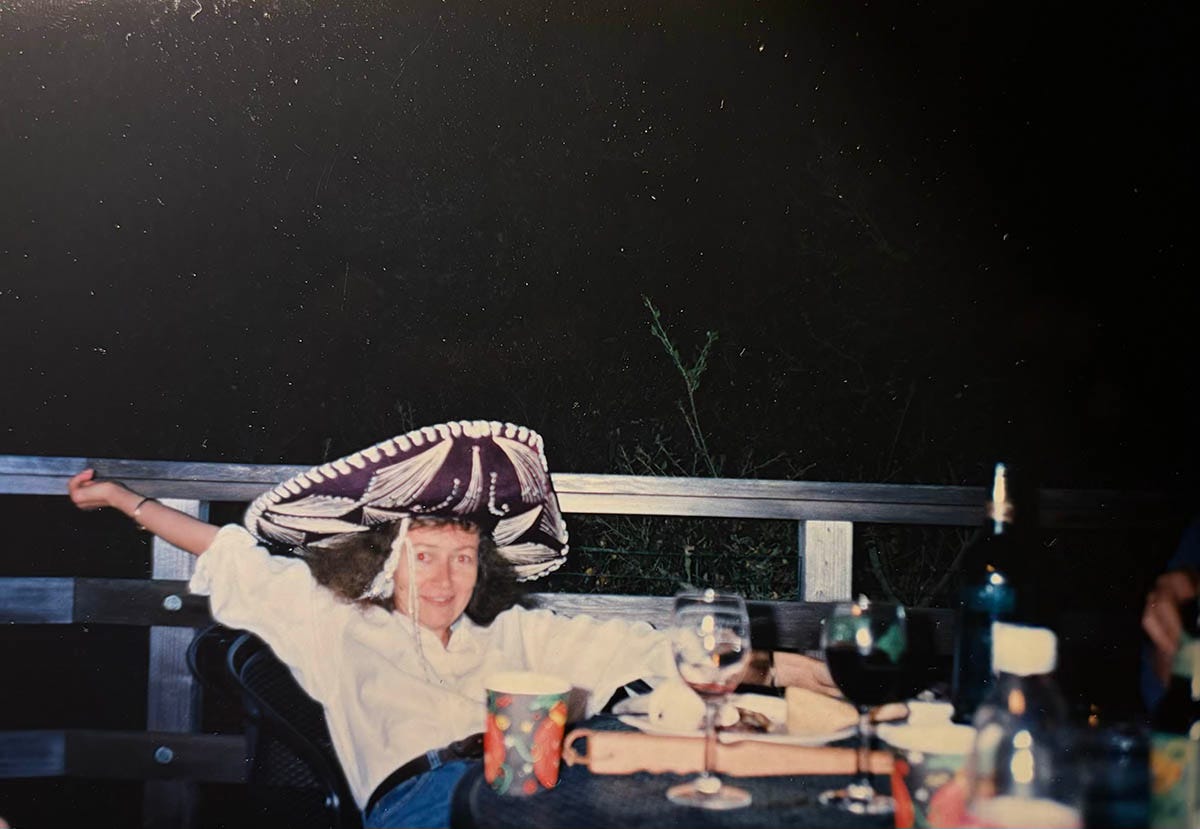
In the lab and outside of it, Cynthia’s personality far exceeded her small frame. Even when she was doing solo lab work, silently using a scientific tool called a micropipette to measure and transfer tiny volumes (microliters) of liquid DNA, you knew she was there. When you turned your back and started to talk about an idea, she would chime in to share her own strongly held opinions. Whenever she was nearby, we all knew it—until one day, she suddenly wasn’t there.
Tremendous promise, bottleneck process
Each of us had been drawn to Jim Allison’s immunology lab at UC Berkeley partly due to his unconventional, somewhat brash style. Maybe you would or wouldn’t get something done here but it seemed like it would be fun. He was a good storyteller and a hands-off leader, and in some ways willing to let us try things a bit on our own, to support our work, even when it was a long shot or wasn’t something we already had skills in doing. We loved the freedom he granted us, but we also knew it was eventually conditional; producing good results would eventually be necessary if we intended to stay in science. We wanted to stay—we’d each decided that this was a good path to pursue and had pretty much closed the doors on other professions. Unsurprisingly, we worked long hours, typically weekends, too, and put aside much of the typical twenty-something ideal of ‘getting a job and settling down’. We all innately believed that if we kept at it, we’d figure out something important, maybe something the world had never seen but needed to know. Cynthia was no exception. When she stopped showing up in the lab, we all noticed.
In my experience, some people don’t talk about having cancer because they’d rather not acknowledge what they see as a weakness. For Cynthia, I think that she didn’t want to be a sympathy case. Whatever her reasons for holding back, her sudden absence changed the energy level in the lab, and we all felt it.
Her mysterious absence, we later learned, had consisted of surgery followed by recovery at home. Jim respected her privacy and kept her secret. Months earlier, she’d been diagnosed with cancer—a disease for which our work would eventually provide a new cure, although none of us knew this at the time. She was optimistic about her prognosis after her tumor had been surgically removed. Her cancer was serious, but it seemed to be localized in one area, which made it operable. Perhaps the tumor had not spread into adjacent tissues. With a stoicism that we knew and respected, she didn’t discuss it. Instead, she returned to the lab, ready to get back to work, but soon afterward, she faced a headwind that, for scientists, amounts to a full-body blow.
While she’d been gone, two other labs had successfully “scooped” the project that she’d started. Essentially, they’d independently been testing a similar idea and within a few months of her return, they’d published their results in a scientific journal. They were dramatic results, but they’d found it, and now she would not. Joonsoo had tried to keep some of her work moving forward in his spare time during her absence, but the other labs had already been far ahead by the time she returned. It was a devastating turn of events, especially since her absence had hardly been voluntary. Instead of wallowing in her professional loss, though, she discussed her options with Jim and decided to proceed with the next key experiment and see where it might lead her. Most people would have assumed defeat and given up; we’d watched many who already had.
Cynthia’s perseverance did eventually yield results, producing the next stage of breakthroughs that moved the field of immunology forward. The labs that published before her had received most of the credit, but that didn’t dissuade her. There are scientists among us who are that devoted, who keep going despite steep odds; she was one of them.
Her cancer returned around 2002, by which time she and Joonsoo, by then her husband, had bought a house and settled into their labs and faculty positions at the University of Massachusetts Medical (Worcester). I’d visited them a year previously, in 2001, and she’d seemed gratified by their life and confident the cancer would remain in remission. It did not, reappearing with a vengeance, encircling her spine. She died in 2004.
Ten or so years after she passed away, I met Joonsoo, ever the foodie, at a hip oyster bar in Boston. By this point, the CTLA-4 discovery we’d made at UC Berkeley in the mid-1990s, a cure for certain types of cancer, had finally been approved as a drug protocol. Cancer patients who wouldn’t have survived could now reclaim active, healthy lives, cancer-free. But it was impossible not to think of Cynthia, of how her life might have been spared, if only the clinical trial work to turn our discovery into an accessible cure for patients hadn’t been delayed so many times, for so many years. That process had eventually involved large teams of people across several organizations, but Joonsoo, Cynthia and I hadn’t been part of it. Cynthia had contributed her ideas to the CTLA-4 discovery in our lab, but she hadn’t lived to benefit from its most significant impact—the chance to outlive her cancer.
As I’ve looked back on her story over the years, Cynthia’s tragically early end has affected how I feel about the delays in both clinical trial work and our slow acceptance of a scientific idea. For a long stretch of time, elongated timelines from discovery to patient-accessible cure or treatment were normalized, to countless people’s detriment. Cynthia is a large part of the reason I’ve ventured outside the lab at times in my career to build and develop a small biotech to test new antibodies against a new set of molecules. She’s also a big reason why I started a group adjacent to UCSF that works on making antibodies for human use. Her story, and others like hers, are why I and others are entering cancer vaccine territory right now, an era where risks are low and the evidence of benefits are rapidly accruing and being better understood.
The process of ushering cancer tissue into deep analysis used to take months and even years. Now it can potentially occur in a matter of weeks without sacrificing important harm reduction parameters. Every day we shave off of that process saves lives. Every day we solve a new complex problem, make a discovery and figure out how to use it, we can potentially extend the lives of people like Cynthia, whose own work has since helped others to regain their health and expand their life and health span. She played a very real role in the progress we are now making. All of the current discoveries and the focus on immunity in cancer started with our lab group and multiple other linked groups spread across the globe—riding high in the front seat of a friend’s car like Cynthia did, heading out for a meal in between experiments.
I had a photograph of her for many years, that I would tape over my desk as I moved from company to company, to remind me what we are working for. Thank you for the nice story, Max.