

Miranda Broz arrived at my lab at UCSF in 2010. She was a first year PhD student at the time, and I immediately noticed that she had the archetypal temperament of a successful research scientist: tenacious, unfettered and upbeat. From our first conversation, she seemed clear on the ambitious goal she wanted to pursue in our lab—to plug into a project seeking to understand what was going wrong in the immune system inside tumors.
On first glance, one might be tempted to conclude that not much immunity was going on since the tumor was growing. This, in fact, was what the cancer field had sort of concluded for years, prior to Checkpoint Blockade approvals. So you may have excused her if she had thought that we may as well not bother looking.
Her project was the kind of science that might not even exist. Years prior, also as a starting PhD student, I, too, had chosen to study science that initially seemed curious, but didn’t obviously lead anywhere substantive. In that setting, we just wanted to know what some molecules on T cells might do. By asking that question and pursuing answers, we figured out how to treat certain cancers. I now refer to these kinds of projects as ‘look-see’ experiments. They may seem frivolous or wasteful. In truth they are real attempts to discover something, which often means challenging prior conclusions. Many debates about what kind of science should be funded disregard the fundamental truth that you have to start by wondering and guessing that your time will be well spent by just digging in and looking. You can’t know what hidden information you may find, but you will never find it if you don’t bother looking.
Miranda seemed well-suited to the enormous challenge we’d laid out together, but I also knew from personal experience—years of trying and trying and nearly failing—that her zeal might not be enough to produce meaningful data. She’d need that data to get a PhD but I couldn’t guarantee her that. As her mentor, I also knew that at times I’d need to let her navigate the rough patches on her own. I could worry but maybe not do the work for her. Frustratingly, the best I could give her was the opportunity to try to discover something new. It was a hefty undertaking with no definitive outcomes, but that is often how important science happens. She joined my team and promptly got to work.
Miranda’s project was preceded by another look-see study that a postdoctoral fellow named John Engelhardt had undertaken in the lab. John had started to take video movies of T cells, or immune cells, within mouse tumors to see how those cells were behaving. He’d seen them swarming around other immune cells, forming clusters that suggested the cells might be “talking” to each other. But that work hadn’t yet led to a clear understanding of what was actually happening in these T cells inside tumors.
A 24/7 student with an exceptional ability to execute experiments, Miranda spent her first full year on her research, but her data seemed to have nothing to offer. As her mentor, I began to question my own decision to sign off on her project. Had I led her down a rabbit hole to nowhere?
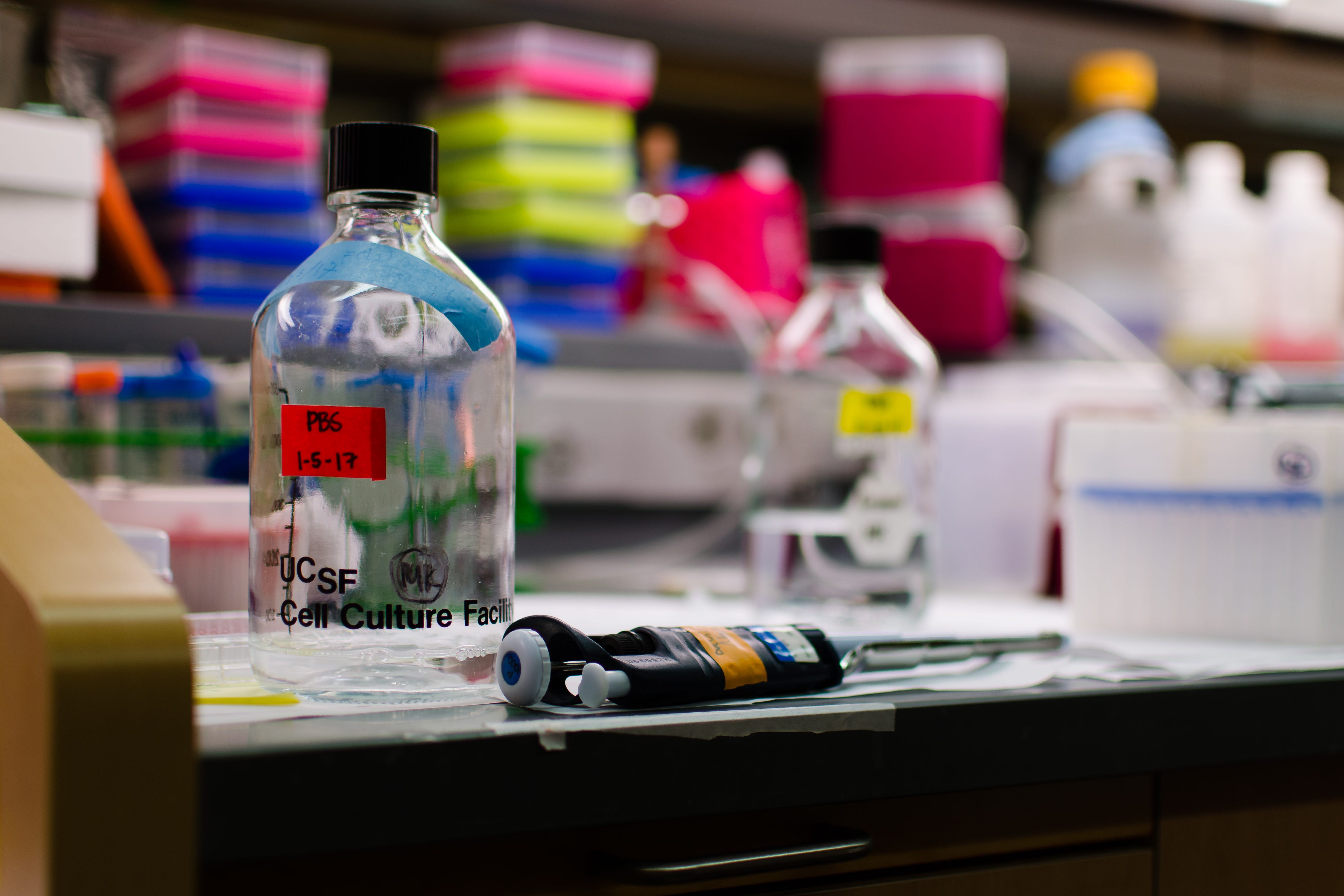
Undeterred by her lackluster progress, she simply kept going. Then one day, she brought me data from what had almost seemed like a lark of an experiment. We’d assessed tumors with a reagent that previously had been associated with a very active immune system. We examined the data at length and realized something interesting: the tumors she was studying had a cell type in them that resembled the cell types we recognized as part of a good immune response. These cell types were rare in tumors, but they were present.
This was new information that surfaced another big question: Could there be a hidden but active immune system buried in the depths of a growing tumor?
Within a few months, Miranda pulled these cells out of many other tumors. We identified them as a very particular form of immune Dendritic cells. Miranda separated a bunch of them from tumors and showed that they could stimulate other immune cells. She separately made movies of them inside the tumors and found that they formed a little active island inside that seemed like a small fire in an icy landscape. She did yet another experiment to show how they were critical to help an immune system reject tumors. Essentially, they make perfect partners for T cells, the white blood cells that play a central role in the immune system, helping to fend off specific threats like viruses, cancers and autoimmune diseases.
This was a major scientific finding, quite different from what Miranda had originally set out to discover. It showed the seed of a good immune system, buried in a barren one.
That work inspired us to get together with a senior faculty member at UCSF, Zena Werb, to collaborate with Miranda to consider the beginnings of an even larger question: How many things is the immune system actually doing?
Miranda and Zena’s collaboration, and the work of many others like them, have opened a hidden doorway to us on what we now think of as the New Immunity. This is not your parent’s idea of the immune system. It is not only a defense system. Rather, it is a multi-faceted, multi-tasking network that can assume different faces and perform different roles.
‘The Defender’ is just the beginning
Your parents probably knew the immune system as what we now call The Defender archetype. When it encounters abnormal cells—viral infections, cancers, diseases—it launches an attack in order to defend against threats to your health. The rare but important Dendritic cells that Miranda’s PhD research revealed are one component of this Defender capability.
Think of the Defender like a protective older sibling, always keeping an eye out for your safety.
What we have learned is that The Defender is only one of about twelve archetypes embedded within the immune system. They include ones that we might call:
The Builder: This archetype gets involved in healing wounds. When you get a cut, someone has to coordinate the teams of activities that put things back together. Think of it as containing the different crews that build a house after a hurricane—first the backhoes to get rid of debris but then the carpenters, electricians, plumbers, all coordinating their activities over time to reassemble you.
The Architect: This one helps build us in new ways, for example optimizing the development of female breast tissue prior to lactation. In this role, the immune system can help to adapt us to changing circumstances, reconfigure us like a Lego sculpture to do different things.
The Bonsai Gardener: This gently sculpts the connections of the brain and helps us to regulate our memories. It literally shapes our personality.
The Zookeeper: Here, the immune system helps to quarantine residual viruses, keeping abnormal cells contained, and any danger they pose, minimized. Think of this like an ethical prison guard or rehabilitation counselor, keeping dangerous actors from doing unnecessary harm.
The Farmer: This archetype takes care of the bacteria in our guts that are essential for us to get the nutrients we need.
The Grocer: This face helps to select which nutrients to put into storage and which to leave in your bloodstream. It helps you safely store the fat you eat, normally in the liver.
These archetypes are creating new gateways into our understanding of disease. In the case of the Bonsai Gardener, immune cells that normally prune your brain can change their programming and contribute to dementias such as Alzheimer’s disease. When this occurs, the immune cells that would normally function as gentle Bonsai gardeners reassemble as something more like the Defender, causing more damage than good. With The Grocer archetype, if fats are incorrectly assembled in the bloodstream, liver disease can result. Health outcomes like these are largely determined by which identity the immune system chooses to implement in which context.
As our research into the New Immunity evolves, immunology seems poised to support new treatments and cures to a variety of diseases that have previously proven challenging to solve. All of these roles use many of the same cells, just configured for different tasks. As in Miranda’s tumor experiments, sometimes more than one may be present at a time and that can give us opportunity to nurture one type of immunity to improve our health. This theme, of how your immune system is out there, available in these many forms to make you better, is a theme I want to explore here, in the Immune Beyond.